The Day Orlando Lost: Colombia Cockfighting In Photos

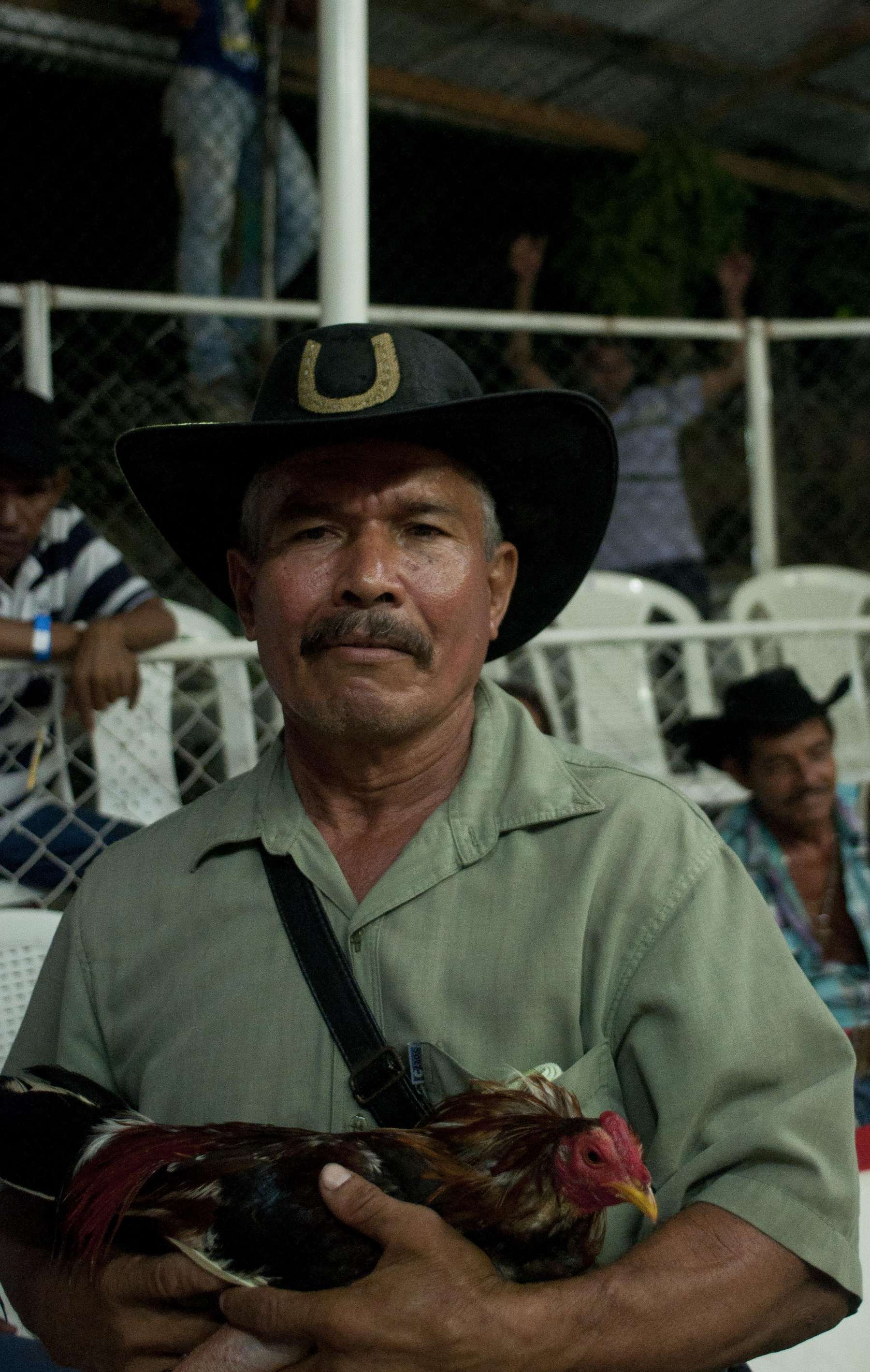
Orlando with his cock

BEACON

When two men on Colombia’s Caribbean coast settle on a deal, they often say ‘palabra de Gallero,’ which means ‘Cockfighter’s word’. It means something along the lines of this: my promise to you is public and now written in stone.

It seems like just about every man I saw in the town of Ciénaga, on Colombia’s Caribbean coast, had a gallo – a rooster – under his arm. Colombia’s Caribbean coast is known for its strong cockfighting tradition. This photo essay takes you inside the fight and tells of the time when Orlando de la Rosa lost the game. Continue reading on Beacon…


Are the FARC afraid of a peace agreement?

“The FARC are scared of reaching a peace agreement,” Daniel Pécaut told Cali based newspaper El Pais de Cali in an interview recently.

Pécaut is a French sociologist and historian who has covered Colombia’s armed conflict almost since it started. He went on to add that it would be very difficult to secure a peace deal in the time remaining.

“Yo creo que será difícil en el plazo que queda y es muy difícil con elecciones sin saber nada de los resultados de meses de negociación.
La idea fundamental es que en el país no hay movilización en favor de la paz, son muy pocos los preocupados por la paz y por eso de los dos lados están más o menos aislados.

“I believe that it will be difficult in the time that remains and it’s very difficult with elections without knowing anything about the results of months of negotiation. The fundamental issue is that there isn’t mobilization in favor of peace, very few are worried over a peace deal and for that reason the two sides are getting more and more isolated.”

It’s been nearly one year after members of Colombia’s government and FARC guerrillas met in Havana, Cuba to start peace talks.

Reinventing how we read: A necessary obsession

https://i0.wp.com/www.debutart.com//media/22569/large/debutart_viktor-koen_15638.jpg

Credit: Viktor Koen

I just got word from the news room in Medellín that we are taking steps toward reinventing Colombia Reports. The main focus is a new platform, a new design, more targeted access, and of course, more strategic advertising.

The changes stirred up some old memories. I picked up a copy of The Economist back in 2011 when I was living in New York City. There was a special report on the news industry called Bulletins from the future. I read through it in one sitting. And then I decided that this is a world I want to be a part of. News in the 21st century, I realized, is brave, chaotic, creative, and totally uncharted.

What’s interesting is that now, 2 years later, I’m not only a part of a news organization, but I’m witness to the chaotic pressures that are shaping new media. Even though it can be exhausting, there’s a thrilling world that’s confused, disorganized, and ripe for change. I can’t think of any better way to spend a life than on the inside.

Here are some thoughts on and notes on the news industry.

The dynamic between readers and journalists is shaping a new landscape, and it is more “chaotic, participatory, and social” than ever before, says The Economist.

For consumers, the internet has made the news a far more participatory and social experience. Non-journalists are acting as sources for a growing number of news organisations, either by volunteering information directly or by posting comments, pictures or video that can be picked up and republished. Journalists initially saw this as a threat but are coming to appreciate its benefits, though not without much heart-searching. Some organisations have enlisted volunteers to gather or sift data, creating new kinds of “crowdsourced” journalism. Readers can also share stories with their friends, and the most popular stories cause a flood of traffic as recommendations ripple across social networks. Referrals from social networks are now the fastest-growing source of traffic for many news websites. Readers are being woven into the increasingly complex news ecosystem as sources, participants and distributors. “They don’t just consume news, they share it, develop it, add to it—it’s a very dynamic relationship with news,” says Arianna Huffington, co-founder of the Huffington Post, a news website in the vanguard of integrating news with social media.

There is much to admire in the new landscape. I think immediately of voice. I think of opinion and how decisions are formed. Instead of a uni-directional voice from a  Mr. Opinionator to His Audience, new media lets the audience engage in the debate and shape the discussion. That is what democracy needs. But new media is a double edged sword. This little bit points out the scary edge rather plainly:

But [the old model] has come unstuck in the internet era as readers have shifted their attention to other media, quickly followed by advertisers. “The audience is bigger than ever, if you include all platforms,” says Larry Kilman of the World Association of Newspapers. “It’s not an audience problem—it’s a revenue problem.” News providers throughout the rich world are urgently casting around for new models.

A radically new organization of the game seems to be at the heart of drawing an answer through this problem. But how? The special report goes on to point out some hopeful models around the world. Here is what’s been happening at two agencies – one in Brazil, the other in France.

Correio da Bahia, a Brazilian paper that underwent this treatment, has been reorganised into four sections, offering a news summary, “More”, “Life” and “Sport”. Similarly, Libération, a French newspaper, stopped trying to provide comprehensive coverage of sport, leaving that to specialist sports papers, sales of which are booming in many European countries. After the redesign the circulations of both newspapers increased. But so far American newspapers have shown no interest in trying anything like this, says Mr Señor.

In 2011, it might have been true that US papers hadn’t caught on. But since then, things have changed. One innovative publication that decided to kill the old model and try something new is Quartz. They’re self-described as “a nerdy bunch,” experimental, and “wholly focused on digital storytelling”. Quartz is a web-friendly publication that reports on business with a global audience in mind. But instead of the traditional row of sections like Politics, Business, Sports, Quartz does “obsessions”.

Journalists in most news organizations have fixed “beats”: bond markets, personal technology, international trade, and so on. At Quartz we organize ourselves around the seismic shifts that are changing the shape of the global economy. We call these topics our “obsessions”.

Here’s what I think Quartz has nailed: they’re responding to the overwhelming complexity that is shaking up the world in the 21st century. How? By finding it, declaring it a “phenomenon” and then following it like a beat. No reader will ever thank a journalist more than when the writer makes a the complicated easy to understand. Here’s one example (one, in fact, that resonates with what we’re talking about here) of how Quartz thinks about their “obsessions”.

The Mobile Web
The web was born on desktop computers in Western countries. But by May 2012 a tenth of the world’s web traffic was on mobile phones—and it’s the so-called “developing” world that is leading the charge, with more than half of web use in some countries coming over mobile. How will this disrupt existing internet giants? Who are the rising stars in emerging markets? How is the shift to mobile affecting the internet’s design and business models? And how will the next billion people get online?

Yeah, so how will the next 1 billion people get online? How will they use the web to consume information? How much will it cost readers to read? How is the culprit. Thankfully Quartz is on it.

I think The Economist’s 2011 report is just as relevant now as it was then. The lens proposed by The Economist is sharper than ever for looking at what has happened in the last two years. And if new media is lucky, the obsessive ways of people at news organizations like Quartz will shed some light on where digital is going. And how to make it pay for strong reportage.

Read more about The Economist’s 2011 Special Report at this LINK

Read more about Quartz at this LINK

Moravia and machetes: How to document a scared face

Wesley Tomaselli 2013

MEDELLÍN, January 2013 – “Intestines, right?” I said, trying to get Olle’s confirmation on the identity of what was floating around in our soup. “There’s no way to be sure,” he said. “You’re right,” I said. “There’s no way to be sure, is there…”

I love it how you can never be sure in Colombia.

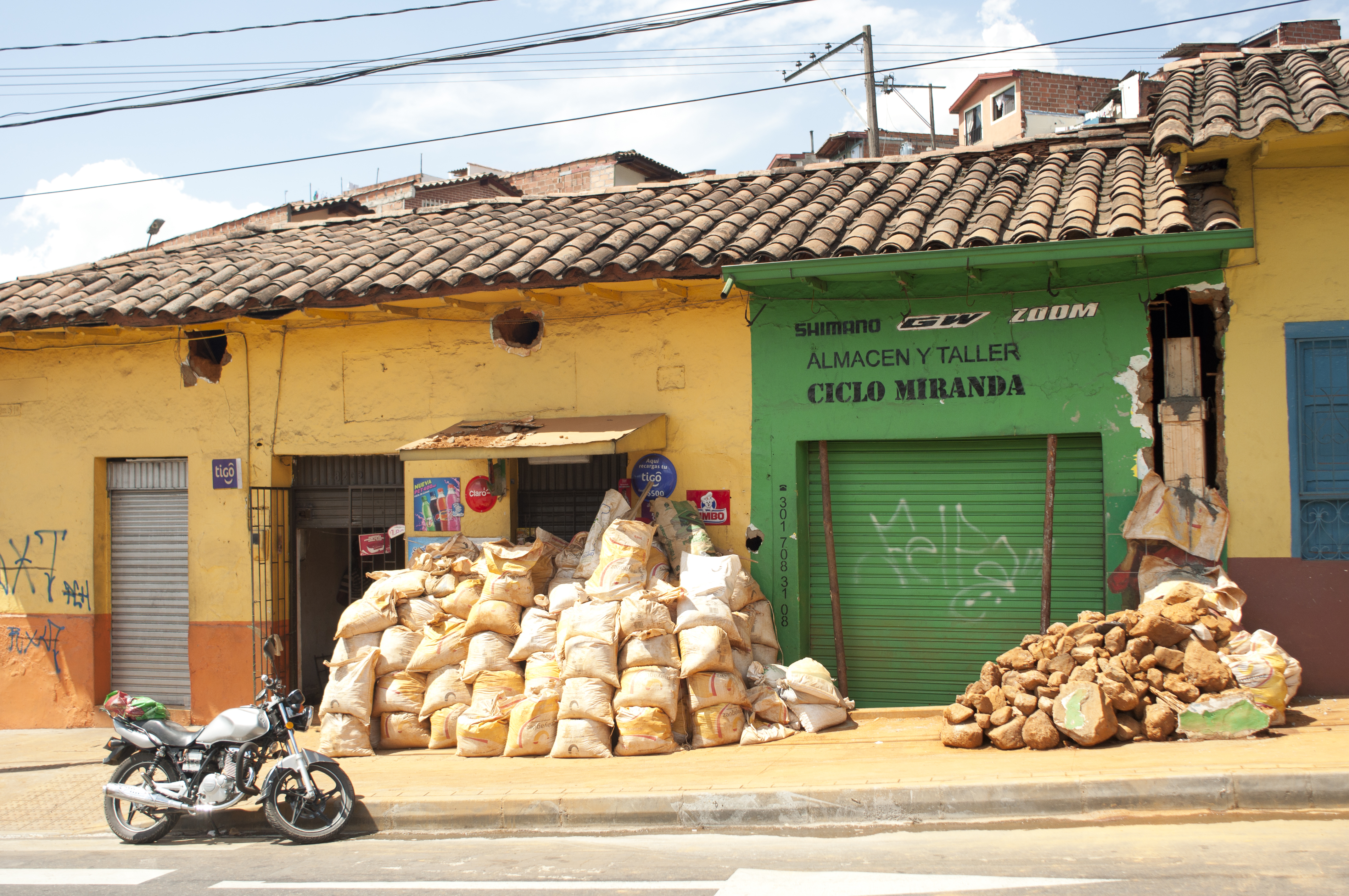
Olle, a journalist and friend, and I were in Moravia, a neighborhood that over less than a decade went from city dump to a thriving little labyrinth of streets filled to the brim with mercantile street peddlers, shop-keepers, and mechanics. When I think about how Latin America’s middle class is getting more urban, rising and transforming, the first place I think about is this place. Moravia.

“I want to photograph this barrio,” I told Olle. “Do it,” he said. “Pitch it to Adriaan. See what he says.”

So I did. Adriaan told me I needed to get an expert source: someone to talk about the history of Moravia’s transformation from the toxic inferno that it used to be into the near paradise that it is today. The change. That’s where the story is, Adriaan told me.

After a string of phone calls, I got in touch with Yeison, a sociologist and spokesperson for Moravia’s cultural center. We set up a meeting. Early. Saturday. He promised to give me a brief history, show me around the barrio, and introduce me to some families that have lived through the transformation.

But when I went to meet him, Yeison didn’t show.

What I’ve learned about asking for a meeting as a journalist is that you’re always gambling. If someone wants to do something that feels better than meet up with you and get asked tough questions, they’re probably going to go off and do it without telling you. It hurts sometimes. But what I’ve learned is that you can’t let being stood up crush you. You’ve got to pivot.

So I said to hell with it, grabbed my camera, and took off on my own.

The life that swirls around you in Moravia is just as intoxicating as Comuna 8, but it’s a different sort of life: sand bags loaded with red dust snooze on a sidewalk, a teetering, blue and yellow six-story tower of brick apartments hangs over the street. Every hue gets representation, it seems. And every color claws at your attention. Green avocados sit in front of a toothless man. He’s selling them. A grumpy fishmonger lifts a bucket and splashes water over a pile of sad, red guts that used to be fish. Old men with gray faces wear bright yellow hats. Girls, young and with black-as-night skin strut past me in blue, skin-tight pants.

Wesley Tomaselli 2013

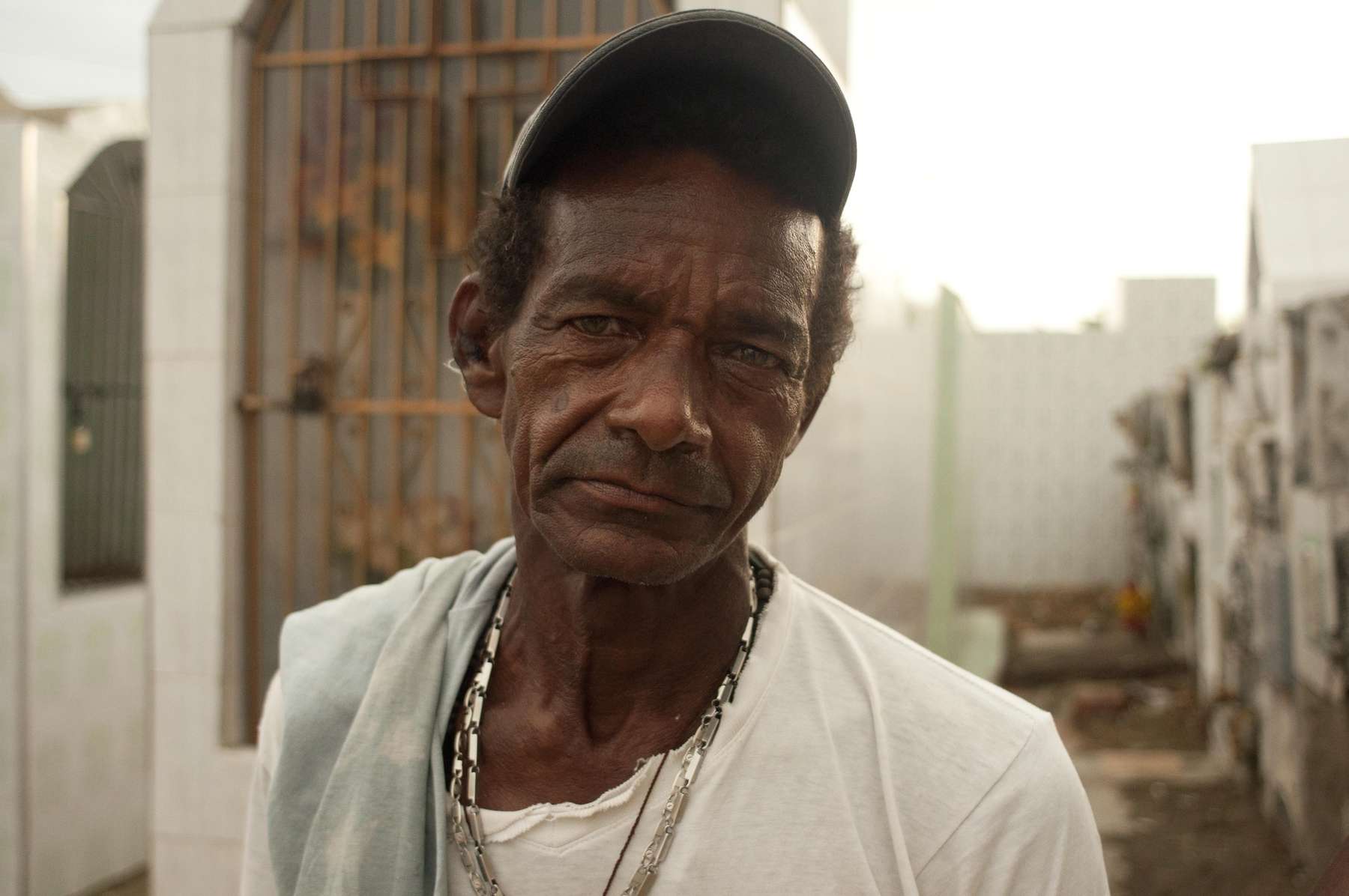
Then I see a man on the curb. He is sitting with a young woman. The woman leaves. The man stays. I notice that he’s dressed like a campesino – a farmer – and at his side, strapped to his belt it an enormous sheath. The sheath protects a long blade – his machete. I take out my camera and go up to him. His face trembles with nervousness. His legs move back and forth. I look at his machete. We’re both scared as hell of each other, I realize. I put my lens up, wave, introduce myself, and ask if I can take his photograph.

There’s something in me that still feels hugely responsible for how I capture a person and expose them to the world through an image. It’s an immensely psychological game, and sometimes, even though the other guy has the blade, you’re the leader. You’ve got to kill the fear, crush the anxiety, and show calm. That earns trust. It’s not easy. I’m still growing.

Finally, the old man breaks a smile. And I click.

See the photo-documentary I did on Moravia’s transformation at this LINK

Graham Holliday’s way

One of the projects I’ve pored over again and again and again during the past 6 months is Kigaliwire. Kigali wire is a social media experiment put together by Graham Holliday. Graham is a social media consultant and trainer, former Reuters correspondent for Rwanda, and freelance journalist.

Credit: Graham Holliday

Kigaliwire is now dormant, but Graham has documented every little detail of how he set it up, what worked, what didn’t, and why he decided to do what he did. It’s a goldmine. Really. It’s a precious resource for anyone who wills to take the digital age by the horns as a foreign freelance journalist.

One of the things that surprised me the most is what Graham says about his business model. Everyone is up in arms over how the business model is changing, what it should be, and what it shouldn’t be. Graham’s attitude, though, is refreshingly pragmatic.

“For all the hugely impressive innovation, the business model appears to rely solely upon advertising – otherwise known as the great white whale that newspapers have been chasing online – and failing to find – since at least the late nineties. And here we are, well over a decade later, and the online advertising model still stubbornly unproven.

I can’t help but snigger a little. From a completely unscientific survey, it appears to me that it’s individuals, going it alone, away from the media dinosaurs, or sometimes in partnership with them, who are the only ones making the net work for them.

The only comparison I want to make between my ‘newsroom model’ and the one of Forbes relates to income. My model makes no mention of it. For a living, I need a more unconventional business model and it works, at least for now.”

If you’re itching to know more about how Graham put together Kigaliwire, here is the LINK


First source: Comuna 8

http://catirestrepo.files.wordpress.com/2010/09/dsc09630.jpgA panoramic view of Comuna 8, one of Medellín’s slums. Credit: Cosas de Alma Blog

MEDELLÍN, January, 2013 – Back when I started, well… let’s just say I wasn’t so sure and certain I wanted to do this.

I wasn’t convinced that Colombia Reports was the best first step. There was just no way to know. I had read Colombia Reports for awhile. It was my main source of English news for what was going on in Colombia. Sometimes the reports were strong. But sometimes they were just plain painful to read. I knew that Adriaan Alsema was the man behind the publication, but I didn’t know much more than that.

And then I met Adriaan.

I met Adriaan through Amy. Amy used to be a freelance reporter in Bogotá. Now she reports out of New York City. I sat down with her and asked her: so what do I have to do?

You’ve got to get pieces. You’ve got to establish yourself, she said. Right now you’re no one, she told me.

Amy told me I should write for Colombia Reports. She said that was a good place to start. Ok, I said. Amy introduced me to Adriaan in November. I wrote a story with him and liked the way he coached me. He was straightforward, honest, and swore a lot. A lot. Rough. I could tell by his voice. My kind of guy.

But I still wasn’t entirely convinced. To know someone face to face tells the truth. Not the whole truth, but a good part of it.

So in January when I opened the door to Adriaan’s apartment in the center of Medellín, and when I saw a man with a cigarette drooping out of his mouth, and when I saw his bare feet, and heard his gruff voice welcome me in to the world of Colombia Reports, I couldn’t help but think that I was shaking hands with a pirate. I couldn’t help but be skeptical.

Now, of course, I know that Adriaan is not a pirate. But I could have sworn he was.

It’s good to be skeptical though. Now, looking back, I think Adriaan would have been disappointed if I hadn’t been.

One of the first things I did with Adriaan was go to the ghetto with him.

“Let’s go to the barrios,” he said. It was my first weekend in Medellín. It was a Sunday morning.

“You mean the ghetto?” I confirmed.

“Yeah,” he said.

Damn! I thought to myself. This guy is going to drag me into a snake pit before my first story even hits the screen. I’ll be dead before I even know whether or not I even want to be a journalist.

And then I realized that I had to go. Otherwise neither of us would ever know who the hell the other one was. So we hopped into a cab. Adriaan climbed into the front seat. I didn’t mind. I mean, he’s bigger than me.

https://i0.wp.com/behance.vo.llnwd.net/profiles22/1801577/projects/5910203/32e718062cd02549d2fc5dd4ae89c3d9.jpg

Two men in Comuna 8. Credit: Matías Espinosa

Adriaan loves the barrios. And now I know why. Let me be straight with you: Comuna 8 is not a safe place, but it is alive with a kind of life that is intoxicating. Yes there are alleys with cold faces and quick trades of white-powder-filled baggies. But there is also the noise of soccer games and the laughter of children, and the smiles of old men with gold teeth who sit down next to you and join you sipping cinnamon-scented coffees. Yes there are police riding around on motorcycles with fingers on their triggers. Like I told you, Comuna 8 is not a safe place, but I felt safe there. And here is why:

Adriaan.

One of the first things I asked Adriaan about was about sourcing stories. How do you treat sources? How do you talk to sources? When do you say a source’s name? When don’t you say a source’s name? What loyalties do you have to a source? How close do you get to a source? How far do you stay away? All of those questions about the ethics behind what a journalist does to source a story were jetting through my mind. I wanted to know.

Adriaan told me to look around at the barrio. He told me how there are paramilitaries in barrios like Comuna 8. He told me how he’s spoken with them. He told me how he’s spoken with members of the guerrilla. He told me how he’s spoken with military officers and politicians and prostitutes and, well, Adriaan talks with a lot of people.

Adriaan told me that you have to build trust. And then you have to keep it. I learned that often people really do want to talk. They want to share their voices with you. You are a gatekeeper, though. And in your interest and your questions there is opportunity for a person to express themselves in a way that will reach the rest of the world. You are the means and the way. But you have to be careful.

You have to protect your sources.

A woman from Comuna 8. Credit: Matías Espinosa

Adriaan told me about how there was a case where someone asked him for names of members of another organization. They knew he had them. Adriaan asked them one simple killer question: “Do you want me to start sharing the names of your people? You don’t ask me for names, and I don’t share yours. Ok? That’s how it works with me. Ok!?”

The way he said was like a knife cutting through the fat of an old wily hog. His voice was so sharp. He was certain of his decision not to gossip about the identities of his sources.

“This is all about keeping trust,” said Adriaan.

We hopped in a cab again and sped off to another barrio where Pablo Escobar and his cartel used to recruit assassins. It’s more peaceful now.

What I learned in the barrios that first day with Adriaan is that if people trust in you, they’re not going to hurt you. If you treat them fairly, and say what you’re going to do, and then do it, they’re not going to hurt you. If a paramilitary with a gun trusts that you’ll tell the world why he has his gun, and why he believes he should use it, then he’s going to do everything possible to be sure that you stay alive. He’s not going to turn it on you if he trusts you. And if someone does threaten you, you ideally have the rest of society to call on for protection.

Now that it’s been over 2 months in, I’ve seen what Adriaan’s ethical rigidity toward how he treats his sources has done for him and for Colombia Reports. Just since January he’s uncovered some really controversial stories. And he’s won friends, not enemies, in the process.

Going to the barrios wasn’t just about getting a spectacular view of Medellín from the mountains. Let me tell you, it’s spectacular. But that’s not what Comuna 8 was all about. Going to Comuna 8 was also a test – test for both of us. We’d either have a foundation for trust afterward, or no foundation. Going to Comuna 8 was about building trust.

So am I convinced now?

Well, it’s always good to keep your doubt ready and sharpened at your side, right? That doubt is the only thing that lets you cut into the world and source the truth. From doubt follows the good questions. The ones that go deep. The ones that dig up the story. I’ll always try to remain doubtful toward the world around me.

I’ll tell you this, though: I’ve got a world of respect for the hard, gravel-voice, 37-year-old Dutchman who brought me to Comuna 8 that first day. We trust each other now. And now the value of a source is clear to me.

A journalist must be loyal to his readers. But a journalist must also know how to build trust with his sources, his editor, and his peers. As a journalist, how to treat a person is what gives a journalist his value. It’s a high moral standard. Towering and lofty. But if Adriaan hadn’t taken me to the barrios, I wouldn’t have ever understood the value behind what we do.

That is something I am convinced of.

Matías Espinosa, a Medellín-based photographer, has a documentary project on Comuna 8. Check his work out here.