Colombia’s Banana Massacre

banana massacre

OZY

Killing in the name of business. It’s hard to imagine today that this could have been even momentarily something to pass without condemnation, but times have changed. On Dec. 6, 1928, Colombian soldiers shot to death banana workers on strike at the United Fruit Company. The U.S. government’s man in Bogotá, Ambassador Jefferson Caffery, sent a dispatch home a month later, informing Washington: “I have the honor to report … that the total number of strikers killed by the Colombian military exceeded one thousand.”

Moneymaking could now return to normal after the month-long strike. Back in the U.S., an aging and ailing Minor Cooper Keith, founder of the United Fruit Company, got the news. Years earlier, Keith had been a restless youngster from New York City who bailed on his private schooling, and at 17 tried his hand at cattle ranching in Texas. But Texas wasn’t big enough for young Keith. Two years after Texas, Keith’s uncle and brothers invited him to Costa Rica to build a railroad. Continue reading on OZY…

photo: Keystone-France/Getty

Sometimes It Takes An Ocean

Bloqueador.1

BEACON

Before I tell you about all the great things that happened to me on vacation, I should probably mention a couple of things that people always ask about for context: First, I didn’t get sunburned…

This Hotel Prado joint on Colombia’s Caribbean coast was the best spot around. It was vacation. And my girlfriend and I were traveling. She used the whole tube of sunblock, but I forgive her. This is a personal essay about vacation and sun block, an abandoned Colombian commercial shipping wharf, and loving someone. Continue reading on Beacon…

If The Dynamite Goes Off

dynamite

BEACON

It was already 11am and our bus had screeched to a halt around 2am that morning. When I woke up, I first thought we had broken down, but then I saw the long line of tractor trailers, engines off, packed like sardines, one after another. Traffic was frozen. It felt like the greatest traffic jam in the world.

Fighting between Colombia’s military and Farc rebels broke out on the road between Barranquilla and Medellín. The road was dynamited, and that meant my bus traveling the route from the coast to the interior was stuck. A personal essay on getting trapped in a mountain traffic jam, Colombia’s armed conflict, and hostility. Continue reading on Beacon…

Her Loyal Lieutenant Is Gone

jailbird

BEACON

Let’s face it: the crime committed down at the Getsemani Hotel wasn’t even a very complicated stunt to pull off, nor was it very elegant. But hell… the guys who did it still got away with it.

Would the crime committed against a guest of the Getsemani Hotel ever have happened if Lieutenant Riveros hadn’t been sent away? This is a personal essay about the corruption surrounding a petty crime on the streets of Cartagena, Colombia’s False Positives Scandal, and loyalty. Continue reading on Beacon…

Are the FARC afraid of a peace agreement?

“The FARC are scared of reaching a peace agreement,” Daniel Pécaut told Cali based newspaper El Pais de Cali in an interview recently.

Pécaut is a French sociologist and historian who has covered Colombia’s armed conflict almost since it started. He went on to add that it would be very difficult to secure a peace deal in the time remaining.

“Yo creo que será difícil en el plazo que queda y es muy difícil con elecciones sin saber nada de los resultados de meses de negociación.
La idea fundamental es que en el país no hay movilización en favor de la paz, son muy pocos los preocupados por la paz y por eso de los dos lados están más o menos aislados.

“I believe that it will be difficult in the time that remains and it’s very difficult with elections without knowing anything about the results of months of negotiation. The fundamental issue is that there isn’t mobilization in favor of peace, very few are worried over a peace deal and for that reason the two sides are getting more and more isolated.”

It’s been nearly one year after members of Colombia’s government and FARC guerrillas met in Havana, Cuba to start peace talks.

How much do Colombia’s victims deserve?

The ringing in the right ear of Edgar Bermudez has not stopped since the former policeman felt an explosion crack open his face, knock him to the ground, blow out his eyes and steal his sight forever. Never, in that horrifying instant, did he lose consciousness. He was 26 years old.

Edgar was stationed in Nariño, a department in the south west of the country, where Marxist guerrilla and Colombian military vie for territory in a half-century armed conflict that has accounted for over 200,000 Colombian deaths. Edgar was part of a special ops team. Their mission was to eradicate coca grown in rebel FARC-held territory. Starting at 1am in the morning, bombs and grenades rained down on him and his battalion. The young policeman watched his friend die. He almost made it through the 6 hour bombardment unharmed. But then there was the explosion.

“The ringing sound bothers me still. It comes and goes though, so not all the time…” says Edgar over hot chocolate in a quiet cafe in Bogotá’s Palermo neighborhood.

image

Former policeman Edgar Bermudez is blind after an explosion took away his sight. photo Wesley Tomaselli

There are other things that bother the 34 year old blind man as well: It bothers him how people don’t watch their umbrellas in the rain. He can’t see them. People don’t pay attention. And the pointed tips strike him in the face as the crowds hurry by. It bothers him that he has to use a cane to get around Bogotá. And it bothers him that victims of the country’s 50-year war don’t get the reparations he thinks they deserve.

How to deal with victims and reparations for their losses is the 5th issue on a 6 point agenda being discuss between members of Colombia and the FARC in Havana, Cuba. Nearly one year on, preliminary agreements on only 1 of 6 points have been reached.

Can cultural tourism clean up Colombia’s image abroad?

published in Seattle Globalist

Once known for brothels and drugs, an old quarter of Cartagena is experiencing big changes as part of a nation-wide cultural makeover.

“Ten years ago there were robberies and prostitutes here,” says Ernesto Muñoz. “But now there are tourists.”

The stern blacksmith turns to us and shows off the iron-forged scrolls in the dim light of his workshop.

He walks down the street from his shop and points out his work: cages, door knobs, gates. He has a reputation when it comes to safeguarding the people of Getsemaní, a working class neighborhood in the old town of Cartagena, Colombia.

But the thing is, safety is not too much of a worry in the neighborhood these days.

The tourism-driven transformation of this neighborhood reflects the challenges that have come with this South American country’s changing image.

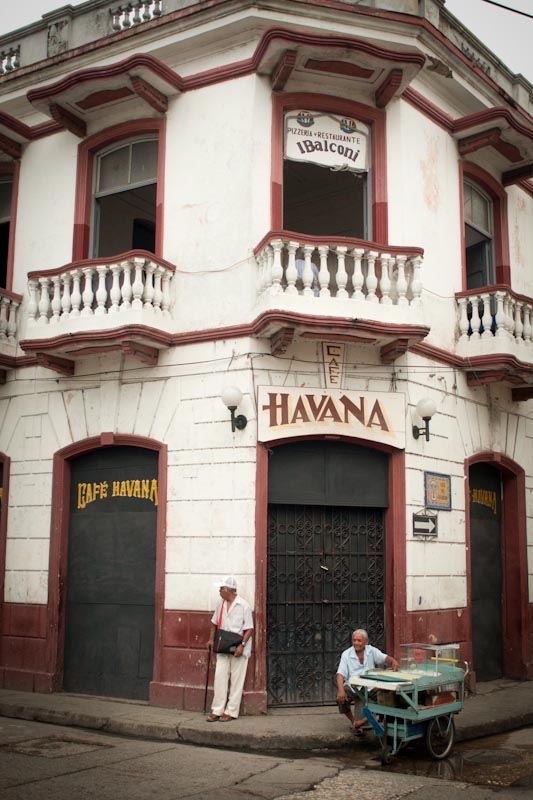
Getsemaní's Cafe Havana, which has hosted celebrities like Hillary Clinton, is symbolic of the challenges of a changing neighborhood trying to hold on to its authentic feel. (Photo by Wesley Tomaselli)

Getsemaní’s Cafe Havana, which has hosted celebrities like Hillary Clinton, is symbolic of the challenges of a changing neighborhood trying to hold on to its authentic feel. (Photo by Wesley Tomaselli)

Some travelers still come for the easy drugs and prostitutes that used to line the neighborhood’s main street.

But more and more, travelers are visiting to meet people like Muñoz and soak up the culture springing up around his workshop.

“And I have no problem with them,” he explains from a plaza outside a worn out yellow church in the center of his neighborhood, where music, soccer games, and street food take over the neighborhood each night.

With $27.8 million in investment this year, Colombia is dressing the city in tourism promotion. The amount invested in Cartagena’s tourism scene outweighed investments in infrastructure and industrial competitiveness, according to figures from Colombia’s Ministry of Commerce, Tourism and Industry.

All that money comes with a new message too.

To combat it’s reputation for cocaine and conflict, Colombia is now promoting the imaginative, literary machinations of national icon Gabriel García Márquez.

In April of this year, Colombia announced its new slogan: “Colombia, Magical Realism”.

Del Morris, a Pacific Northwesterner in his late thirties, escaped to this city from the cold, oil sand country in Northern Canada, where he works as a welder. He came searching for travels that mirror the magical realities Colombia promises. Cartagena had just what he wanted.

“This is a place where I would love to learn ironwork,” Del says, pointing toward the iron scrolls that decorate gates, cages and door features around Getsemaní.

Tourism has helped to boost Colombia’s economy and image over the past decade. Much of the transformation is thanks to former President Alvaro Uribe, whose series of controversial hardline security policies helped turn cities like Cartagena into safe destinations for travelers.

Money is only the first step though.

Cristian Ahumada, director of Ciudad Movil, an arts & culture workshop in Getsemaní, says that there are a lot of foreigners and travelers who come to participate in the neighborhood’s flourishing cultural scene.

He thinks the Getsemaní has the right ingredients to change Colombia’s image.

“It wasn’t always like this. It used to be considered a really dangerous neighborhood.” says Ahumada, who grew up in the city. “But now the main street is filled with hotels and travelers.

But it’s still a delicate issue, he says. According to some residents the neighborhood, known for its sleepy streets drenched in beautiful colonial architecture, is in danger of being overrun by the wave of travelers.

Blacksmith Ernesto Muñoz shows Northwest native Del Morris how to craft a scroll out of metal in his workshop in Cartagena. (Photo by Wesley Tomaselli)

Blacksmith Ernesto Muñoz shows Northwest native Del Morris how to craft a scroll out of metal in his workshop in Cartagena. (Photo by Wesley Tomaselli)

There’s a local population that isn’t in favor of it. Lots of people I know complain about gentrification,” adds Ahumada.

The other problem, of course, is that there are still foreigners who come to Colombia’s Caribbean city for its vices.

In April of 2012, a scandal broke out when 13 C.I.A. Secret Service agents enjoyed a night of drunken debauchery involving prostitutes and booze during a visit by President Barack Obama for the Summit of the Americas.

Cartagena taxi drivers report that they still encounter plenty of tourists in search of drugs and prostitutes, not just beaches and historical sites.

Prostitution is legal in Colombia in designated tolerance zones. But it still taints the country’s image.

Ahumada says that for the most part, however, travelers who come to his city join in on the throng of arts, music and culture that gives it its spirit.

It’s a point of cultural exchange,” he says.

Inside Ernesto Muñoz’s shop, Del Morris picks up the blacksmith’s scrolls and admires them. The forge is hot, and sweat pours off hard, serious faces. Muñoz is proud of his work. The pounding of the hammer against the anvil starts up again.

The Canadian welder says he feels inspired after visiting Ernesto’s forge. He wants to bring back what he learned to Vancouver and someday start his own blacksmithing shop.

Visitors like Morris may be the key to nurturing Getsemaní’s art, music and craftsmanship.

But if tourists make different choices with their money, the local culture might just fall prey to gentrification and disappear.

UK, Colombia strengthen ties in education, infrastructure, development

April 23rd, BOGOTÁ – (Colombia Reports) – Top British and Colombian officials on Monday celebrated a new partnership that promises to strengthen ties in higher education, science and business.

Colombia’s recent economic transformation, coupled with better security and a prospect for peace has ushered in a wave of trade interest from other countries. A British mission led by Minister of Universities and Science David Willetts brought optimism for Colombia’s future, as well as prospects for increased trade between the two nations.

“We have been looking on with great respect and admiration at the transformation of Colombia in the past years as Colombia becomes a modern, liberal democracy,” Willets told a packed roomful of Colombian business leaders, policy makers and officials. Continue reading at Colombia Reports…

What hurts. Just write what hurts.

20120820-_DSC0031

Hemingway said you should “write hard and clear about what hurts.”

I think this matters more than anything for a writer. Any writer. You’ve got to feel some hurt for what you’re writing about. There has to be a deeper connection to your subject. There’s got to be concern. Deep concern. Deep, dug-in, unquestionable concern for what you pay attention to and what you report.

After getting involved with Colombia Reports, my editor said that he needed someone to report from Bogotá. I said I would. He said OK.

When I came to Bogotá, though, my editor wanted me to cover National politics. But I told him I wanted to cover business and finance instead. That’s what concerned me: how is the world is doing business, who is making money, how are they making it, how are they spending it, who wins and who loses?

The thing I like about my editor is that he understands what really drives people. He knows that if I’m deeply concerned with my beat, then I’m going to work hard to get the stories that circulate around that beat. If he pushes me into something I’m not deeply concerned about, I’m going to drown in apathy. My stories will suffer. We both lose that way. He knows it. I know it. You’ve got to write about what hurts.